Fun Experiments to Explore Magnetism
Fun Experiments to Explore Magnetism
Fun Experiments to Explore Magnetism
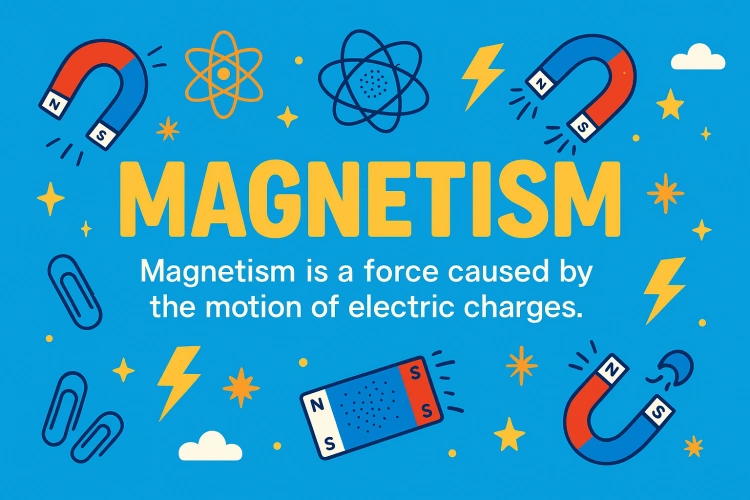
Before diving into experiments, let’s first understand what magnetism is. Magnetism is a force generated by the movement of electric charges. Though invisible, it plays a powerful role in our daily lives, shaping how we use technology and even how we navigate the world. Every magnet has two poles—north and south—that interact with each other and with certain materials such as iron. Opposite poles attract, while like poles repel. This simple principle can be explored through many fun activities! By grasping these basic interactions, we can build a stronger understanding of magnetic fields and their fascinating applications in both technology and nature.
DIY Magnet Experiments
Experiment 1: Magnetic Maze
Materials Needed:
- A small magnet
- A metal ball or a paperclip
- A shoebox lid
- Markers
- Tape
Instructions:
- Draw a maze on the inside of the shoebox lid.
- Tape the metal ball or paperclip at the start of the maze.
- Place the magnet underneath the shoebox lid.
- Move the magnet to guide the ball or paperclip through the maze.
This experiment illustrates how magnetic forces can move objects without any physical contact. It provides a simple yet captivating way to demonstrate how magnets can control objects from a distance. Watching a metal ball or paperclip travel through a maze under the influence of a magnet is both exciting and thought-provoking, drawing attention to the invisible forces at work. Beyond the fun, this activity serves as an excellent introduction to the concept of non-contact forces and their role in shaping many scientific phenomena.
Experiment 2: Floating Magnet
Materials Needed:
- Two bar magnets
- A pencil
- Tape
Instructions:
- Tape one bar magnet to a flat surface with its north pole facing up.
- Tape the other magnet to the pencil, ensuring its north pole is facing down.
- Carefully place the pencil above the fixed magnet.
The pencil will float in the air due to the repulsive force between the like poles of the magnets. This experiment vividly illustrates magnetic levitation and the repelling nature of like poles. It serves as a fantastic demonstration of how magnetic levitation can be harnessed in real-world applications, such as in maglev trains that hover above tracks, reducing friction and allowing for high-speed travel. Observing this phenomenon can lead to discussions about potential innovations and the physics of magnetic fields.
Expereiemnt 3: With Ready-Made Kits for Magnet Experiments
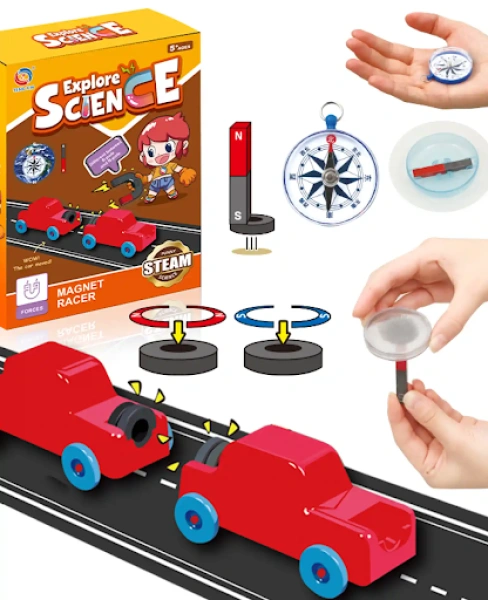
Ready-made kits are a fantastic option for those who prefer a more structured approach to learning about magnetism. These kits often come with detailed instructions and all the necessary materials, making them ideal for classroom settings or at-home learning. One exciting option is the Magnetic Car Kit.
Magnetic Car Kit
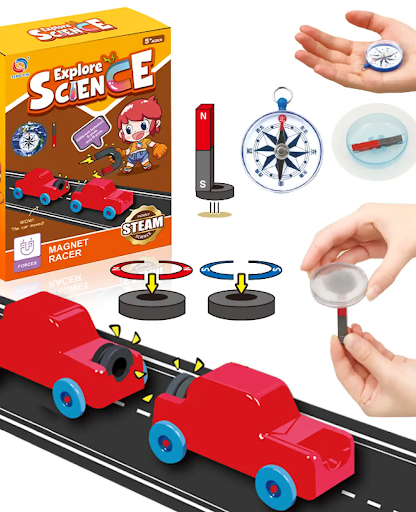
This kit includes everything needed to explore the principles of magnetism through fun, hands-on activities. With the Magnetic Car, kids can build and customize their own magnetic vehicle while learning about magnetic forces and motion. The kit typically comes with magnets, wheels, and detailed instructions that guide users through multiple experiments. Children can experiment with how magnets can propel the car and explore concepts of attraction and repulsion. This engaging approach not only reinforces theoretical concepts but also encourages creativity as kids design their own unique magnetic cars. By combining play with learning, the Magnetic Car Kit provides an exciting entry point into the world of magnetism, helping kids gain a deeper understanding of this fundamental force while having fun.
Exploring Magnetic Forces for Kids
Experiment 4: Iron Filings Art
Materials Needed:
- Iron filings (available in science kits or craft stores)
- A piece of paper
- A magnet
Instructions:
- Sprinkle iron filings onto the paper.
- Place the magnet underneath the paper.
- Gently shake the paper to see the filings align along the magnetic field lines.
This experiment is both visually striking and educational, helping kids grasp the invisible force fields created by magnets. As iron filings arrange themselves into patterns, they reveal the unique shapes of magnetic fields. Through this hands-on activity, children can transform an abstract concept into something they can see and understand, which strengthens both comprehension and memory. The artistic patterns also spark creativity, encouraging learners to experiment with different magnet shapes and positions to observe how the designs change.
Experiment 5: Magnetic Slime
Materials Needed:
- Liquid starch
- Glue
- Iron oxide powder
- A strong magnet
Instructions:
- Mix equal parts of glue and liquid starch in a bowl.
- Add a small amount of iron oxide powder and mix thoroughly.
- Knead the mixture until it becomes slime.
- Use a strong magnet to make the slime move and stretch.
Creating magnetic slime is not only fun but also a great way to explore the properties of magnetic materials and non-Newtonian fluids. This experiment is sure to captivate children's attention! The tactile nature of the slime provides a sensory experience, making the learning process more engaging. Additionally, this activity introduces concepts such as viscosity and material science, sparking discussions on how similar materials are used in industrial applications.
The Science Behind Magnetism
Magnetism is one of nature’s fundamental forces, essential to many technologies—from electric motors to data storage. Through these experiments, children gain hands-on experience with magnetic forces, sparking curiosity and encouraging deeper exploration. Learning about magnetism also opens the door to understanding its close connection with electricity and electromagnetism, providing valuable insights into how these forces shape the modern world.
Real-World Applications of Magnetism
Magnets are used in everyday life, from securing doors on refrigerators to powering high-speed trains through magnetic levitation. Understanding how magnets work can inspire innovations and solutions to real-world problems. For example, magnetic resonance imaging (MRI) in medicine relies on magnetic fields to create detailed images of the inside of the body, revolutionizing diagnostics. Exploring these applications can motivate learners to consider careers in physics, engineering, and technology, where magnetic principles are key to innovation.
Conclusion
Exploring magnetism through experiments is an exciting and interactive way to connect with science. Whether using ready-made kits or simple DIY projects, these activities offer a hands-on approach to understanding magnetic forces. By nurturing curiosity and encouraging exploration, we can inspire future scientists and innovators. The knowledge gained from these experiments becomes a foundation for more advanced scientific discoveries.
So, grab a few magnets and start experimenting—the fascinating world of magnetism is ready to reveal its secrets. This journey of exploration may spark a lifelong passion for understanding the natural world and the forces that shape it.