hands on activities for newton s third law
Hands on Activities for Newton's Third Law
Hands on Activities for Newton's Third Law
Hands on Activities for Newton's Third Law
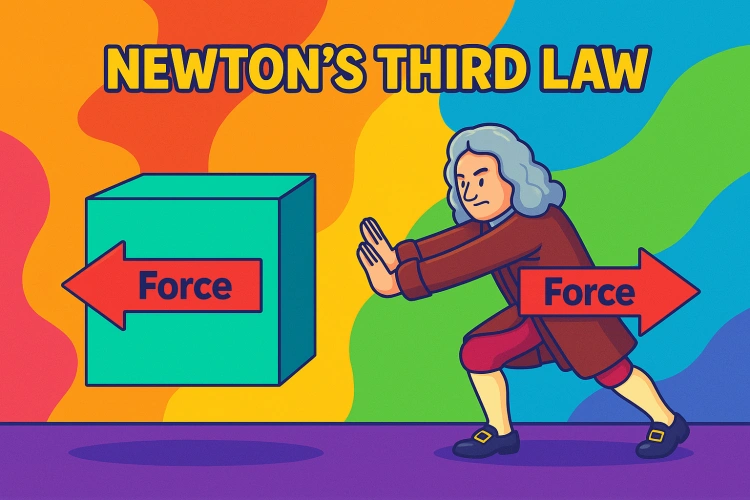
Have you ever pushed against a wall and felt it pushes back? That's a simple demonstration of Newton's Third Law of Motion. This law states that for every action, there is an equal and opposite reaction. In this article, we'll explore a variety of hands-on activities and fun science projects that illustrate this fundamental principle in physics. These experiments are perfect for classroom settings or even at home, engaging young minds in the wonders of science.
Before diving into the activities, let's briefly discuss what Newton's Third Law is all about. This law is one of the three laws of motion proposed by Sir Isaac Newton in the 17th century. It explains that forces always occur in pairs. When you exert a force on an object, the object exerts an equal and opposite force back on you. Understanding this concept is crucial for grasping how the world around us works.
Balloon Rocket
One of the simplest and most effective ways to demonstrate Newton's Third Law is through a balloon rocket. This activity requires minimal materials and setup, making it a perfect classroom or home experiment.
Materials Needed:
- A balloon
- A piece of string
- A straw
- Tape
Instructions:
- Thread the string through the straw and tie the ends of the string to two stable objects, such as chairs, so that it's taut.
- Inflate the balloon but do not tie it. Instead, pinch the end to hold the air in.
- Tape the balloon to the straw.
- Release the balloon and watch as it propels along the string.
The action of the air rushing out of the balloon creates an equal and opposite reaction, pushing the balloon forward along the string.
Water Rocket
Take your exploration of Newton's Third Law to the next level with a water rocket. This activity is slightly more complex but offers a thrilling demonstration of physics in action.
Materials Needed:
- A plastic bottle
- Water
- A cork or stopper
- A bicycle pump with a needle adapter
Instructions:
- Fill the bottle about one-third with water.
- Insert the cork into the bottle opening, ensuring it's secure.
- Use the bicycle pump to pressurize the bottle through the cork.
- Release the bottle and stand back!
As the water is forced out of the bottle, it creates an equal and opposite reaction, propelling the bottle upwards.
Ready-Made Kits for Easy Learning
For those who prefer a more structured approach, ready-made kits offer a convenient way to explore Newton's Third Law. These kits typically include all the necessary materials and instructions, making them ideal for both parents and teachers.
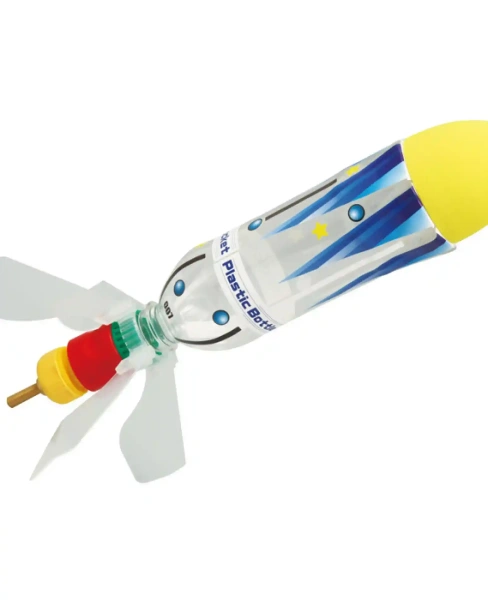
Rocket Launch Kit
<<<INSERT VIDEO CONTENT}}}}}}
The Rocket Launch Kit is an exciting way to engage kids in the principles of Newton's Third Law. This kit allows children to create their own rocket and launch it into the sky. The hands-on experience of assembling the rocket and witnessing its flight provides a thrilling demonstration of how action and reaction forces work in a practical setting. Not only does it ignite children's interest in science, but it also encourages them to think critically about the physics involved in rocket propulsion.
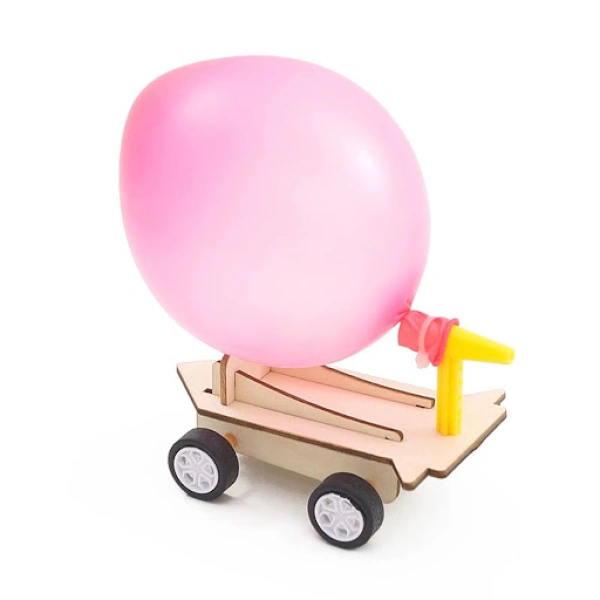
Newton's Car Kit
<<<INSERT PICTURE}}}}}}
The Newton Car Kit is another fantastic option for demonstrating the principles of force and motion. This kit provides everything needed to build a mini car that operates on the principles of Newton's laws. As students assemble the car and conduct experiments by applying different forces, they'll observe firsthand how these forces lead to motion. This engaging experience reinforces their understanding of action-reaction pairs and helps to solidify their grasp of fundamental physics concepts.
By incorporating these ready-made kits into your lesson plans or home science activities, you'll provide children with structured yet enjoyable methods to explore Newton's Third Law while fostering a love for science.
Hands-On Activities for Class
Tug-of-War
A classic game of tug-of-war is an excellent way to demonstrate Newton's Third Law in action. When two teams pull on a rope, the force exerted by each team is met with an equal and opposite force from the other team. The team that applies more force effectively moves the other team, showcasing the action-reaction principle.
Hovercraft
Create a simple hovercraft using a CD, a balloon, and a bottle cap. This activity not only illustrates Newton's Third Law but also introduces concepts like friction and air pressure.
Materials Needed:
- A CD
- A balloon
- A bottle cap with a hole
Instructions:
- Glue the bottle cap to the center of the CD.
- Inflate the balloon and stretch its neck over the bottle cap.
- Place the CD on a flat surface and release the balloon.
As the air escapes from the balloon, it creates a cushion of air under the CD, allowing it to glide smoothly across the surface.
Understanding Physics for Kids
Engaging children in hands-on activities helps them understand complex physics concepts in a fun and interactive way. By exploring Newton's Third Law through these experiments, kids not only grasp the scientific principles but also develop critical thinking and problem-solving skills.
Building Curiosity
Encourage curiosity by asking open-ended questions during these activities. For example, "What do you think will happen if we use a bigger balloon?" or "How can we make the water rocket go higher?" This approach fosters a deeper understanding and encourages kids to experiment further.
Integrating Technology
Incorporate technology by using slow-motion video apps to capture the experiments. Reviewing these videos with students can offer insights into the action-reaction forces at play and highlight details that may be missed during real-time observation.
Conclusion
Newton’s Third Law of Motion is a cornerstone of physics that can be brought to life through simple, interactive experiments. From classroom demonstrations to fun projects at home, these activities provide an engaging way to experience the principle of action and reaction in action. By encouraging hands-on exploration, we not only make physics exciting but also spark curiosity and inspire future scientists and innovators.